I’ve been wrangling over words all week. Not quite in the same way the author of the Second Letter to Timothy means. But kind of. I’m taking a course on an overview of the Bible. This course requires me to read a chapter of our textbook (which is the actual lesson), then consult with 2 study Bibles and read all the commentary in them to eventually, answer the 2 essay questions with 300 words or more. I’ve been sitting at my laptop all week comparing and contrasting the 4 Gospels and I still have another essay to write and an extra project to videotape. I interrupted my homework to print out today’s service and write this morning’s sermon. It’s been brewing since Wednesday.
The second Letter to Timothy, chapter 2, verse 14 says this: “Remind them of this, and warn them before the Lord that they are to avoid wrangling over words, which does no good but only ruins those who are listening.”
This is about the early churches. The first Christian churches. We’re talking about 80 AD (or 80 CE as I now say in my Bible Study course). Even back then, churches (by that I mean the people) were bickering, arguing over what is right and what is wrong. Who did what to whom. What the Pastor (or whatever they were called back then) meant when he said this or that. Paul was writing letters to the people of Corinth because the rich people attending the church in Corinth were actually suing the poor people who also attended the church in Corinth! So much for diversity. So, yeah. That. One more time: “Remind them of this, and warn them before the Lord that they are to avoid wrangling over words, which does no good but only ruins those who are listening.”
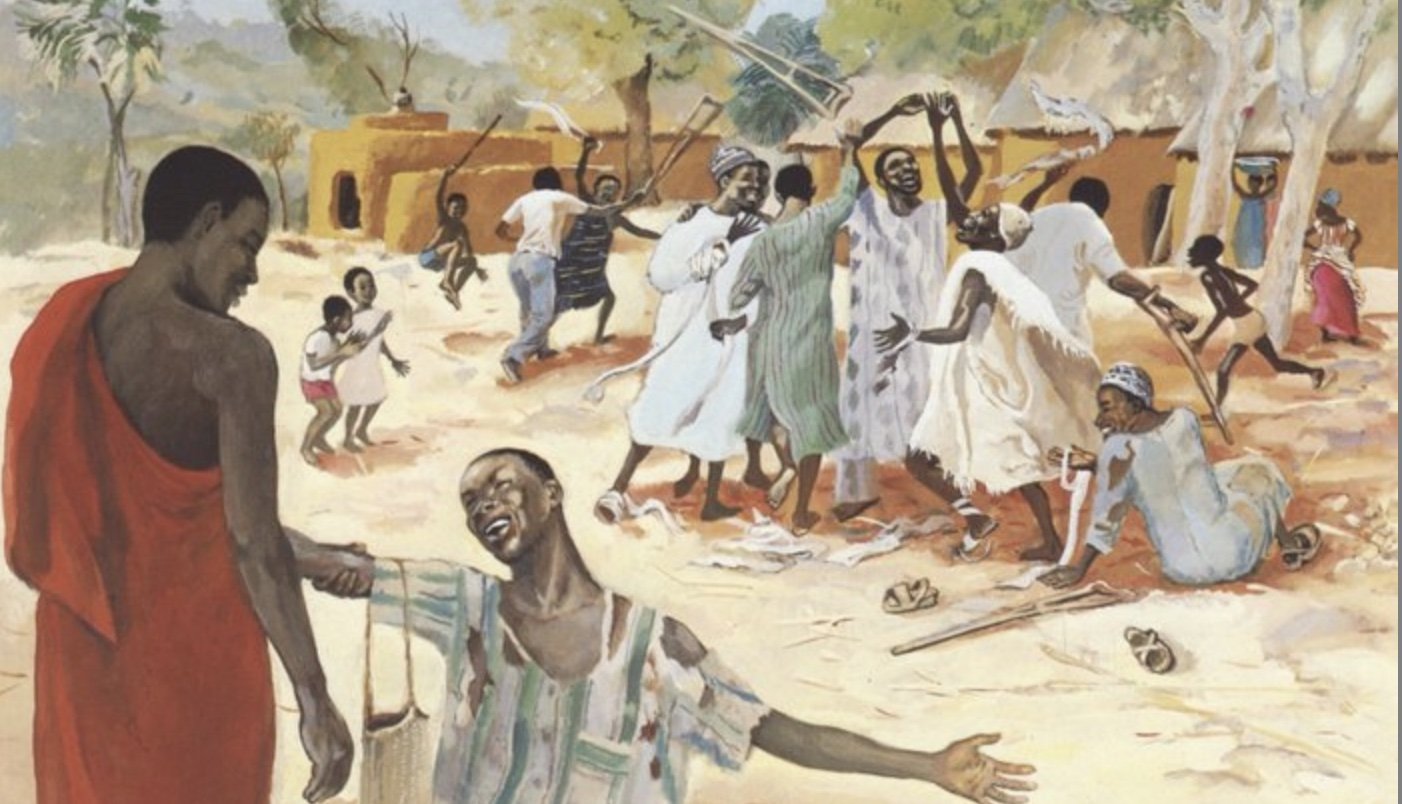
Now, I’m going to use the word “wrangling” to describe a slightly more calm and peaceful situation: so, you’re in church and you're sitting there “listening” to the Gospel reading, or a Psalm, or a Hebrew Bible reading. Whatever. And you hear the first few lines. And you think, “oh yeah, I know this one” and off goes the switch. You stop listening. Because you’ve been listening to scripture in church for decades. Decades. And you know this already. But do you? (Yup.) Do you? (Yes…) But do you? (I thought so…) Maybe you don’t. Wrangling Over Words. Maybe there’s something in that story about the lepers, or the man consumed by Legion, or the Prodigal Son that you never really heard before. Maybe there’s a connection that you haven't made yet. Maybe there’s a really, really big message that you haven’t quite gotten, in all your “listenings.” I mean, this is Jesus Christ we’re talking about. This is the guy who got himself crucified to get his point across. Maybe you could listen harder? Maybe?
Or maybe there’s a line or two or three of scripture that gets stuck in your craw. Something that you just don’t agree with. Your theology doesn’t embrace what you’re hearing. Or maybe, you’ve heard another preacher talk about this text in such a way that it turned you completely off about it. So, when it comes around once every 3 years or so, you don’t listen. Well, that right there – disagreeing with the scripture you claim to worship and obey – is the invitation you may need to hear it differently. Try it on another way. Take that dog out for a walk and see if it can look up at you adoringly instead of biting you.
On Wednesdays, after Bible Study, I go to Edward’s Church, where the Interim Pastor, Jennifer Geary, holds a Communion Service. And there’s always a bit of scripture from the following Sunday, and a brief Homily. Well this past Wednesday, Pastor Geary talked about today’s reading from Luke. And about the 10 people with leprosy and the one who came back to thank Jesus. She told me that the common premise of the one who came back – the Samaritan (it always seems to be a Samaritan) – came back to thank him. And Jesus said, "Were not ten made clean? So where are the other nine? Did none of them return to give glory to God except this foreigner?"
And she said the conclusion of that story always bothered her. She told me that that leper was a Samaritan and he couldn’t show himself to the Jerusalem priests because he was from Samaria. He had to go back to his own country and show himself to the priests there, unlike the 9 other guys who simply had to walk down the street to the Jerusalem priests. And so, he went back to thank Jesus, and go on his way to Samaria.
Now, wasn’t it just last week that we heard from Jesus that we are like slaves and shouldn’t expect thanks for what we do because it is our duty to lift up the downtrodden in whatever way is appropriate? And yes, it’s always good to be grateful, to give thanks to God. And always good to not expect thanks, because that might be “wrangling over words.” Kind of. Sort of.
And the point that Reverend Geary ultimately made was that when these 10 people all were stricken with leprosy, they all had something in common; they were a unit. They were siblings. Now that they’re healed, they’re just like everybody else. Except that they’re not; they then begin to see what they don’t have in common. They focus on how they’re different. And so, the Samaritan leaves town alone while all his old leprosy buddies go off to witness to the Jerusalem priests and proclaim the goodness of God through Jesus of Nazareth.
So, all that just to say. Next week, or maybe the week after, listen to the Word of God. Listen for something you never heard before. Get a new idea about just what Jesus meant when he spoke to you through Luke, or Paul, or Elijah. And become a new you.